
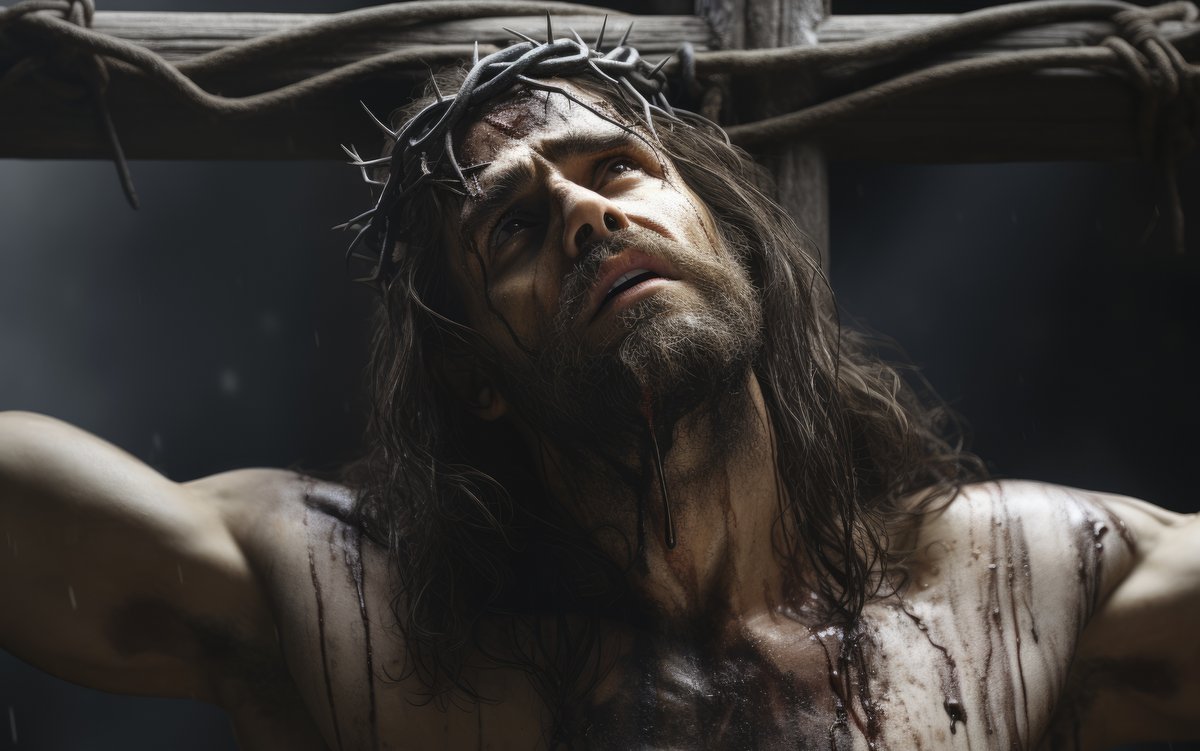
A Paradox of Recognition: Creator and Messiah Rejected
In the previous blog post, we dove into the opening verses of John’s Gospel, exploring the profound significance of John 1:1-5. We unpacked the idea that the genealogy of Jesus wasn’t just about tracing lineage; it was about revealing the divine character of the one who would come. Now, we’re continuing that journey, venturing into John 1:10-13. These verses have really struck me lately, and I wanted to share some of my thoughts and takeaways. They offer an even deeper glimpse into the mystery of Jesus – and they’re a bit of a head-scratcher, to be honest!
The Scripture:
Let’s set the stage. Here’s the passage we’ll be exploring:
“He was in the world, and the world was made through him, and the world didn’t recognize him. He came to his own, and those who were his own didn’t receive him. But as many as received him, to them he gave the right to become God’s children, to those who believe in his name: who were born not of blood, nor of the will of the flesh, nor of the will of man, but of God.” – John 1:10-13 (WEB)
The World Didn’t Recognize Him – A Stunning Thought
What’s been really resonating with me in these verses is the sheer paradox of it all. John states that Jesus was in the world, and even more amazingly, that the world was made through him! It’s incredible to consider that everything we see, everything we experience, got its start with Him. Yet, the very world He created didn’t even know who He was. It’s a startling reality that I’ve been wrestling with. It highlights the rejection Jesus faced from the very beginning.
Suppressing the Truth
I’ve been thinking about how many people choose to ignore the evidence of creation, and refuse to acknowledge God. They seem to prefer the darkness, unwilling to step into the light because their actions are often exposed by it. Jesus himself said, “For everyone who does evil hates the light, and doesn’t come to the light, lest his works would be exposed.” (John 3:20)
Paul, writing to the Romans, speaks of those who suppress the truth. “For the wrath of God is revealed from heaven against all ungodliness and unrighteousness of men, who suppress the truth in unrighteousness, because that which is known of God is revealed in them, for God revealed it to them. For the invisible things of him since the creation of the world are clearly seen, being perceived through the things that are made, even his everlasting power and divinity; that they may be without excuse.” (Romans 1:18-20)
It’s a sobering thought – choosing to remain in the dark rather than face the light.
Worshiping Manmade Gods
And Jeremiah, centuries before Jesus, voiced similar sentiments. He declared, “But Yahweh is the true God. He is the living God, and an everlasting King.” (Jeremiah 10:10).
He then condemned the nations who fashioned their own idols, proclaiming, “You shall say this to them: ‘The gods that have not made the heavens and the earth will perish from the earth, and from under the heavens.’” (Jeremiah 10:11).
It’s a sobering observation – people creating their own versions of God instead of embracing the one who created them.
Jeremiah then powerfully describes the futility of these creations, noting, “Every man has become brutish and without knowledge. Every goldsmith is disappointed by his engraved image; for his molten image is falsehood, and there is no breath in them. They are vanity, a work of delusion. In the time of their visitation they will perish.” (Jeremiah 10:14-15).
It really underscores the point that these idols are ultimately empty and fleeting.
God Gave Them Over to Their Lusts
Paul further elaborates in Romans, stating, “Because, knowing God, they didn’t glorify him as God, neither gave thanks, but became vain in their reasoning, and their senseless heart was darkened. Professing themselves to be wise, they became fools, and traded the glory of the incorruptible God for the likeness of an image of corruptible man, and of birds, and four-footed animals, and creeping things. Therefore God also gave them up in the lusts of their hearts to uncleanness, that their bodies should be dishonored among themselves; who exchanged the truth of God for a lie, and worshiped and served the creature rather than the Creator, who is blessed forever. Amen.” (Romans 1:21-25).
It’s a powerful and unsettling depiction of the consequences of rejecting God.
His Own Didn’t Receive Him – A Heartbreaking Reality
But even more astonishing than the world’s rejection is the fact that those who should have recognized Him – God’s own people – didn’t receive Him either. It’s a heartbreaking thought: God’s people didn’t recognize and receive their Messiah.
Looking back at the Christmas story (see Part 1), it’s striking how few people were truly prepared for Him. We have Elizabeth, Zechariah, unborn baby John, as well as Mary and Joseph, of course. Then there are the humble shepherds and the angels. Next are Simeon and Anna in the temple who were looking for the Messiah. Finally, the foreign wise men from the East who saw the sign in the stars.
Yet, for 30 years, Jesus lived among them, finding favor with everyone, and yet they didn’t realize who He was. It’s just… astonishing. Jesus himself said, “Most certainly I tell you, no prophet is acceptable in his hometown.” (Luke 4:24)
It makes you wonder what kept them from seeing what was right in front of them.
Receiving and Received: The Gift of Adoption
What’s been particularly encouraging to me in John 1:12-13 is the flip side of this rejection – the incredible promise for those who did receive Him.
It’s not just that they received Jesus; it’s that they were, in turn, received by Him. They were granted the right to become God’s children, born not of blood or human will, but of God himself. It’s a breathtaking thought – being adopted into God’s family!
This isn’t just a symbolic gesture; it carries with it profound privileges. Let’s unpack some of those scriptures a bit further:
A Final Thought: Receiving and Believing
There is one other thought from verse 12 I’d like to share. Those who received him, also BELIEVED in him. This is the essential part of the gospel.
The Scriptures repeatedly declare, “The just (righteous) shall live by faith.” (See Romans 1:17) Indeed, Hebrews 11:6 states plainly that without faith it is impossible to please God. And let us not forget the foundational verse: “By grace you have been saved through faith, and that not of yourselves; it is the gift of God.” (Ephesians 2:8)
As we continue our study of John 1, it’s impossible to ignore the profound connection to the very beginning.
Recall the opening verses: “In the beginning was the Word, and the Word was with God, and the Word was God.” (John 1:1) This “Word,” as we’ve explored, isn’t just a collection of ideas; it’s a divine, active force.
Hebrews 11:3 beautifully illuminates this: “By faith, we understand that the universe has been framed by the word of God, so that what is seen has not been made out of things which are visible.”
This isn’t merely a statement about the origin of the cosmos; it’s a declaration that Jesus, the Word made flesh, was intimately involved in creation itself. To believe in Jesus is to embrace the reality that He didn’t just enter the world; He made it. It’s a recognition of His divine authority and a trust in His eternal nature. To believe is to open the door to a life transformed by grace and empowered by the Spirit, a life rooted in the very foundation of the universe.
Reflections and Sharing
I encourage you to take some time to personally reflect on these scriptures, the profound gift of adoption, and grace through faith.
Prayer of Thanksgiving
Abba Father,
thank you for the incredible gift of adoption.
Thank you for welcoming us into your family and
for bestowing upon us the privilege
of calling you “Abba, Father.”
Help us to embrace our identity as your children,
to walk in the light of your grace, and
to reflect your love to the world.
Guide us as we continue to study your Word
and grow in our understanding
of your boundless love.
In Jesus’ name, Amen.
Share your thoughts and reflections in the comments below!
Footnote: This post represents the author’s original reflections and takeaways from the Scripture passage. Artificial intelligence (AI) was utilized to research background information, and then refine and structure these thoughts into a cohesive and engaging blog post, while preserving the author’s core ideas and interpretations.