
Scriptures: Overview of Mark’s Gospel
Summary of Mark’s Narrative
Gospel of Mark Summary: A Complete Animated Overview
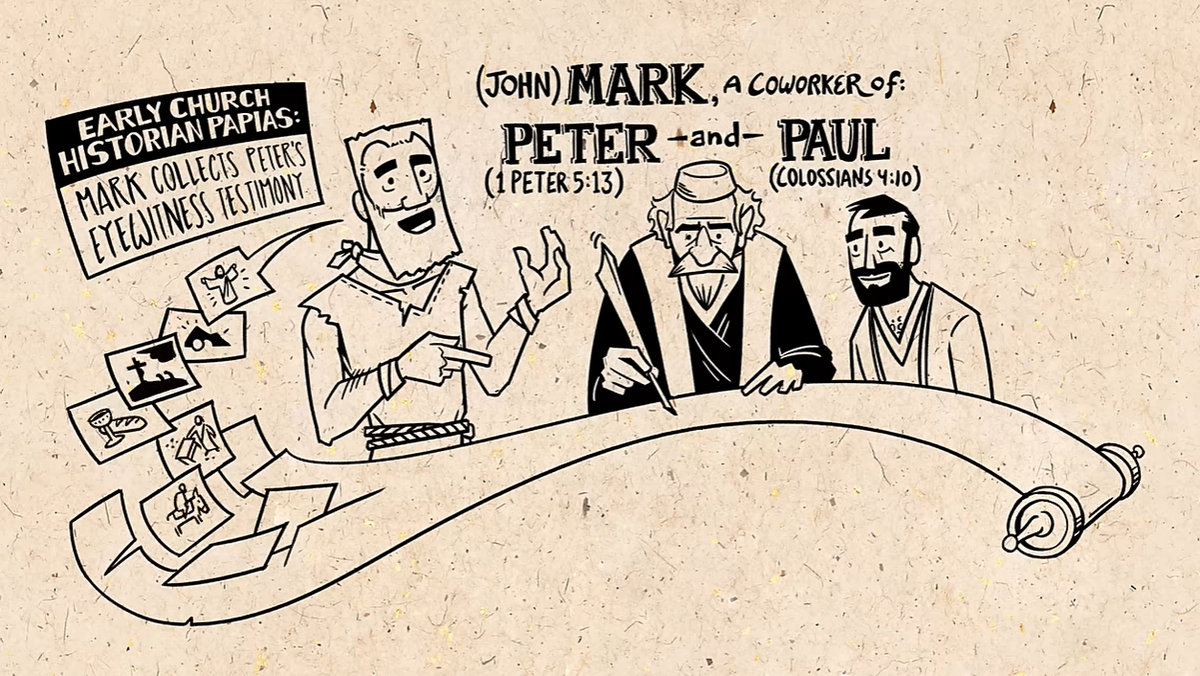
This video provides an animated overview of the Gospel of Mark, noting that historical traditions link the account to the Christian scribe John Mark, who shaped the eyewitness accounts and memories of Peter. Mark’s narrative style is unique: after opening with his central claim that this is the “beginning of the good news about Jesus the Messiah the Son of God,” he influences the reader by simply displaying Jesus’ actions and words and showing how others react to Him.
Mark designs the story as a three-act drama:
The Gospel of Mark’s original ending is abrupt. After discovering the empty tomb, the women are told Jesus has risen and will meet the disciples in Galilee, but they flee in terror and silence, telling no one. This lack of closure forces the reader to grapple with the “strange and scandalous claim” that the suffering, crucified, and risen Jesus is the Messiah, revealing God’s “upside-down kingdom”. The story ends by prompting the reader to answer the question: Will you run away like the disciples, or recognize Jesus as King and tell the good news?
Go Deeper
The Gospel of Mark Isn’t What You Think: 4 Surprising Insights
The Gospel of Mark is a masterfully crafted drama that challenges our expectations about Jesus:
- Mark opens with a bold declaration that Jesus is the Messiah and Son of God, then steps back to let the story unfold through action rather than commentary.
- Jesus redefines what it means to be Messiah—not a conquering military king, but a suffering servant who gives his life as a ransom.
- In a stunning irony, a Roman soldier at the crucifixion becomes the first person to truly recognize Jesus’s identity, while the disciples remain confused.
- The original Gospel ends abruptly with women fleeing the empty tomb in fear, intentionally leaving the story unresolved—forcing readers to decide their own response.
Mark’s narrative design invites us to actively wrestle with the scandalous claim of a crucified and risen King, rather than passively receiving information.