
The Upside-Down Kingdom: Luke’s Revolutionary Portrait of Jesus
For many, the story of Jesus begins with the classic nativity scene: a baby in a manger, shepherds, and a host of heaven. That familiar image comes to us from the Gospel of Luke, one of the earliest accounts of Jesus’ life. But if we stop at the manger, we miss the point. Luke, a meticulous investigator, constructs a narrative that is less a gentle bedtime story and more a revolutionary manifesto for an upside-down kingdom. It’s a story designed to show not just what happened, but why it matters.
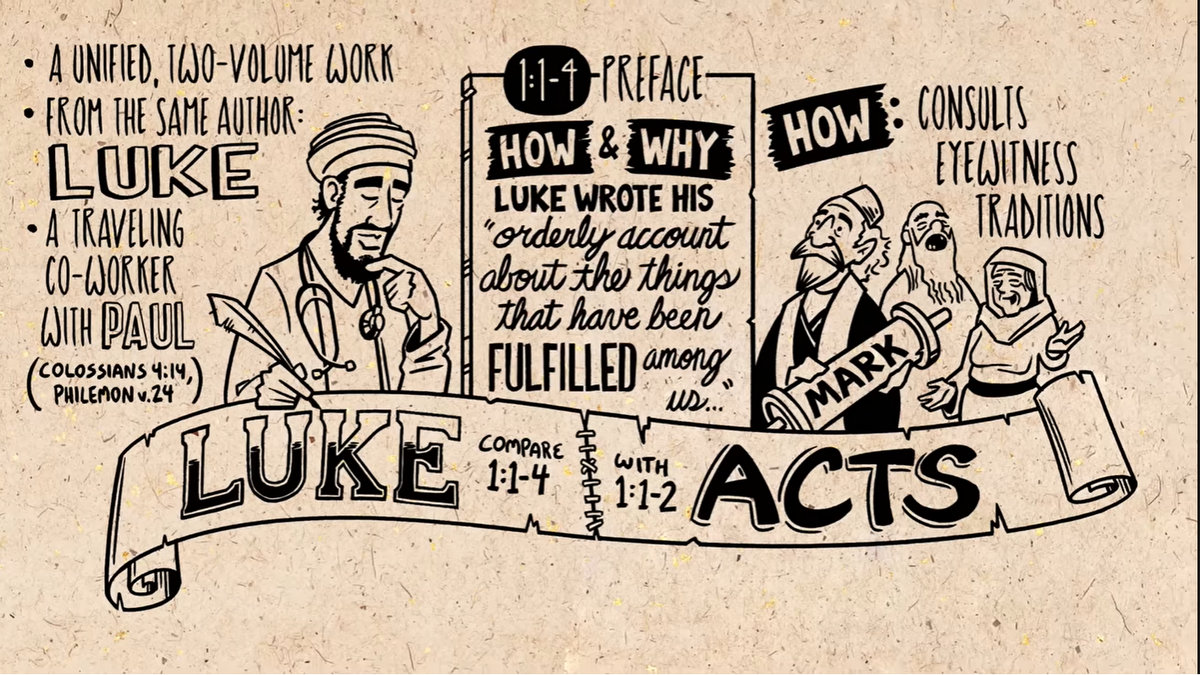
The author, Luke, was not an eyewitness to the events. Instead, he presents himself as a careful investigator who compiled an “orderly account” based on “eyewitness traditions.” As the author of both this gospel and the Book of Acts, Luke created a unified, two-volume work. This unique, investigative perspective shapes the entire story, revealing several impactful takeaways that challenge common assumptions and deepen our understanding of his message.
1. The Gospel is Good News for the Poor and the Powerless.
While all gospels present Jesus as a Messianic King, Luke uniquely highlights the social implications of his mission. When Jesus announces his purpose in his hometown synagogue, he uses the word “release” (Greek: aphesis). This term directly refers to the Old Testament “year of Jubilee,” a symbolic reenactment of God’s justice where all slaves were freed, debts were canceled, and land was returned to its original families.
In Luke’s context, the “poor” (Hebrew: ani) for whom this good news is intended is a broad category. It includes not just the financially destitute but also those with low social status in their culture: “people with disabilities, women and children and the elderly.” This also extends to “social outsiders,” such as people from other ethnic groups or those whose life choices placed them outside of accepted religious circles. Luke makes this tangible, showing how Jesus’ mission “involves the healing of a bed-ridden sick woman, or a man who has a skin disease,” as well as “welcoming into his community a tax collector like, Levite” and “forgiving a prostitute.”
Luke emphasizes this point by featuring Jesus’ reading from the prophet Isaiah:
“The Spirit of the LORD is upon me, to preach good news to the poor and freedom for prisoners New sight for the blind, and freedom for the oppressed.” (See Isaiah 61)
This focus is deeply impactful. It demonstrates that Jesus’ mission isn’t just about spiritual salvation but brings a “reversal of all of our value systems.” His kingdom actively expands the circle of who is welcomed into God’s family, starting with those on the very margins of society.
2. Discipleship is a Journey “On the Way.”
A large and unique portion of Luke’s Gospel (chapters 9-19) is structured as a “travel narrative,” where Jesus and his growing group of disciples are on a long journey to Jerusalem. Luke uses this physical journey as a powerful metaphor for what it means to be a disciple: “it’s something you do where you learn as you go along life’s path.” Discipleship isn’t a static position but an active process of learning and participation.
It is during this journey that Luke includes more of Jesus’ teachings on “money, possessions and generosity than anywhere else.” The resulting idea is that following Jesus should produce a “minimalist mentality creating a freedom from possessions that allows for radical generosity.”
Furthermore, some of Jesus’ most famous parables—which are unique to Luke—are told on this road. In the Parable of the Good Samaritan, Jesus redefines the very concept of “neighbor,” while the story of the Prodigal Son explains Jesus’ entire “Kingdom mission.” The father’s celebratory party for his lost son represents God’s joyous welcome to every kind of person, with the only entry requirement being “humility and repentance.”
3. Jesus’s Death is Framed as a “New Exodus.”
In a pivotal scene unique to his gospel, Luke describes Jesus transforming on a mountain in the presence of Moses and Elijah—”the two other prophets who encountered God’s presence and voice on a mountain.” Luke explicitly states that they were speaking together about the “Exodus” that Jesus was about to fulfill in Jerusalem.
The significance of this reference is profound. By connecting Jesus’s impending death to the Exodus story, Luke portrays Jesus as a “new Moses who will lead His newly formed Israel into freedom and release from the tyranny of sins and evil in all of its forms: personal, spiritual and social.”
This theme is carried through to the Last Supper. During the Passover meal—the annual remembrance of Israel’s liberation from slavery—Jesus creates “new symbols about this new Exodus.” The bread and wine, representing his body and blood, become the signs of the new liberation that his death will bring.
4. True Recognition Happens in Seeing the World Through Jesus’s Eyes.
One of Luke’s “most beautiful stories,” found only in his account, occurs after the resurrection. Two of Jesus’ disciples are walking to a town called Emmaus, heartbroken because their hopes for a political messiah who would redeem Israel from Roman rule were now dead. “It was all for nothing,” they thought. Jesus appears and walks alongside them, but they don’t recognize him.
The moment of recognition is subtle yet powerful. Later, “as Jesus has a meal with these two He breaks bread for them… and it’s in that moment that they recognize Him. Then He disappears.”
The point of the story is a powerful one about what it means to follow Jesus. “When Jesus’ disciples impose their agenda and their view of reality on Jesus, He remains invisible and unknown to them.” According to Luke, it is only by submitting to the “upside-down Kingdom of Jesus that is epitomized in His broken body on the cross offered in self-giving love” that one can truly see and know the real Jesus.
Luke meticulously crafts a portrait of Jesus whose mission was to bring about an upside-down kingdom. It is a kingdom of radical generosity, where the poor and marginalized are elevated, and freedom is offered to all. This journey of discipleship challenges our most basic social values and asks us to see the world from a completely different perspective.
Seeing this vision of an “upside-down” kingdom, what is one social value we hold today that Luke’s Gospel might challenge us to reverse?