
The Gospel of Mark Isn’t What You Think: 4 Surprising Insights
Introduction: The Story Behind the Story
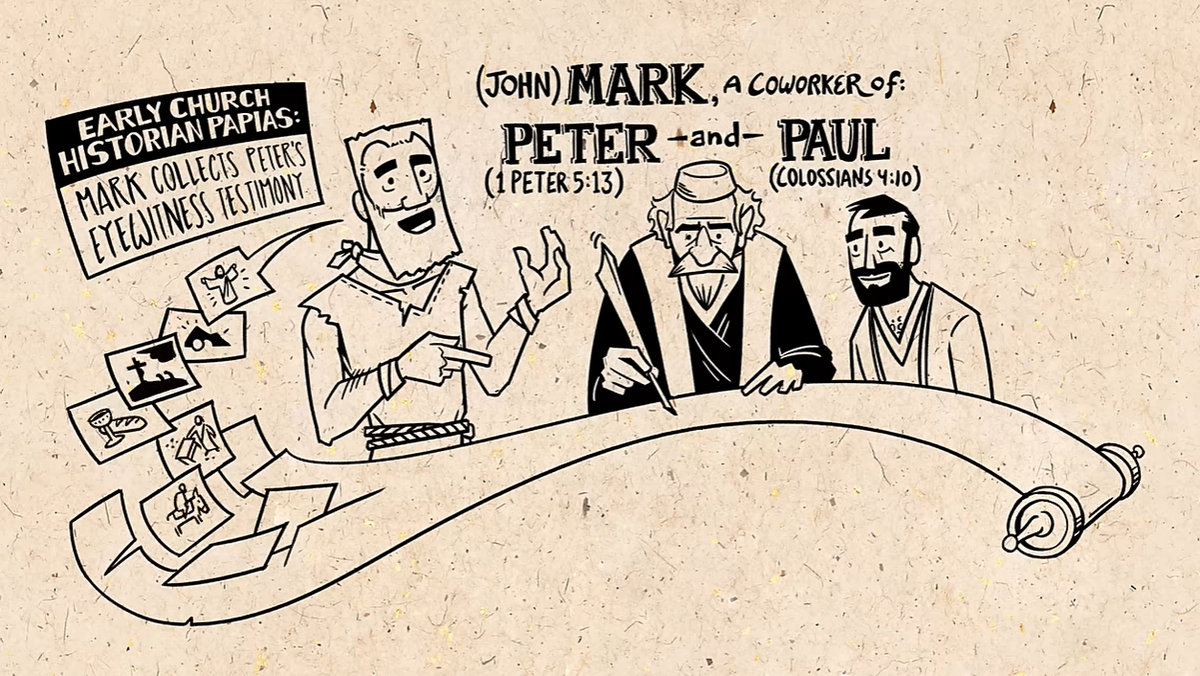
Most of us are familiar with the basic story of Jesus. But what if the earliest written account of his life was less a gentle biography and more a fast-paced, carefully designed drama? The Gospel of Mark, an account traditionally based on the raw, eyewitness memories of the apostle Peter, is structured with deliberate narrative choices that are designed to challenge readers and upend their expectations.
This article explores four of the most surprising takeaways from its masterful and often unsettling dramatic design.
1. The Author Steps Back After Just One Line
Mark makes his central, astounding claim about Jesus in the very first sentence of the book. Then, for the remainder of the story, he never speaks in his own voice again.
He begins with a direct and powerful declaration:
“it’s the beginning of the good news about Jesus the Messiah the Son of God.”
After this single statement, Mark shifts his role from author to narrator. Instead of telling the reader what to think about Jesus, he masterfully shows them who Jesus is through his actions, his words, and the reactions of the people around him. This narrative technique forces the reader to become an active observer, to weigh the evidence for themselves, and to decide what they think of the central character.
2. The Messiah Nobody Expected
At the time, the common expectation for the Messiah was a victorious military king who would rescue Israel from its Roman oppressors. This is precisely what the disciples, led by Peter, believed Jesus had come to do.
Jesus, however, reveals a paradoxical and shocking identity for himself: the suffering servant King foretold by the prophet in Isaiah 53. For Jesus, being the Messiah meant bringing God’s rule not by conquering others, but by giving up his own life. He summarized his entire mission in one stunning statement:
“the Son of man did not come to be served, but to become a servant and give His life as a ransom for many.”
This radically reorients the very meaning of following a king. According to Jesus, following him isn’t about gaining status or power. It is a path of service, self-sacrifice, and the rejection of violence and pride.
3. The Most Unlikely Person Figures It Out
Throughout Mark’s drama, key moments of divine testimony—like a cloud descending and God’s voice declaring Jesus is his Son—are consistently paired with the confusion and fear of Jesus’s closest followers.
This pattern culminates in the story’s climax: the crucifixion. But here, Mark masterfully inverts the pattern. Instead of a divine cloud, it is darkness that descends. Instead of the divine voice from heaven, it is Jesus’s own cry before he dies. In this moment of ultimate weakness, the great surprise of the story is revealed. The very first person in the entire narrative to grasp and announce the shocking truth about Jesus’s identity is not a disciple, whose confusion persists, but a Roman soldier watching him die.
The soldier makes a powerful declaration:
“this man was the Son of God.”
It is a profound paradox. Jesus’s true identity as the Son of God is finally recognized not in a moment of glorious power, but in utter vulnerability—and it is an outsider who sees it clearly.
4. The Original Story Ends on a Shocking Cliffhanger
The earliest and most reliable manuscripts of the Gospel of Mark end abruptly. In the final scene, several women go to Jesus’s tomb and find it empty. An angelic figure informs them that Jesus is risen and commands them to go tell the disciples the good news.
But they don’t. The original story concludes with a final echo of the fear that has plagued the disciples all along: “they fled from the tomb in terror, telling no one, for they were afraid.”
While other endings were added much later in less reliable manuscripts, it is likely this abrupt conclusion was intentional. The goal was not to provide neat closure. Instead, it forces you, the reader, to grapple with this very strange and scandalous claim about a crucified and risen Messiah.
Conclusion: The Question Mark Leaves for You
The Gospel of Mark is a masterfully crafted story filled with shocking claims and upside-down ideas about power, love, and what it means to be a king. By refusing to tie everything up neatly, the author intentionally leaves the drama’s tension unresolved.
The story ends without closure, forcing you to grapple with its strange and scandalous claim. Will you run away in confusion like the disciples, or will you recognize this crucified and risen Jesus as your King and share the good news? The story leaves that question for you to answer.