
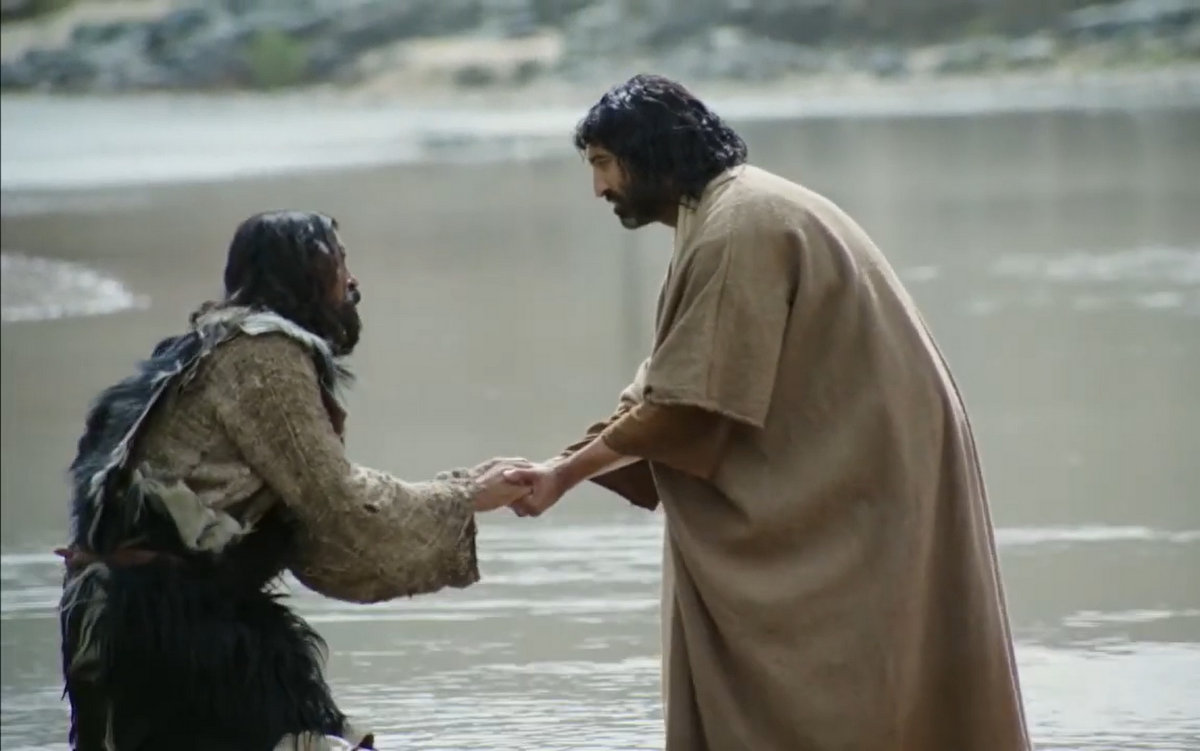
The Light and the Witness: John the Baptist’s Quiet Surrender
The Irony of Recognition
John the Baptist was no stranger to Jesus. He knew Him as a cousin, a childhood companion. Yet despite this close relationship, he did not immediately recognize Jesus as the Messiah — not until divine revelation made it clear.
This irony underscores a deeper truth: even those closest to the light may need to be shown it. John’s journey was not one of instant recognition, but of revelation — a reminder that faith often requires more than familiarity.
A Witness Who Knew His Role
After John recognized Jesus as the Messiah, he did not withdraw from ministry. Up until he was thrown in prison by King Herod, John continued to baptize, to preach, to testify — even as Jesus began His own public ministry and drew large crowds.
At the same time, both men were baptizing — John in Enon near Salim, and Jesus in Judea. When John’s disciples observed that people were leaving John’s ministry to follow Jesus, they approached him with concern.
“Rabbi,” they said, “the one you testified about — the one you said was the Messiah — is now baptizing, and everyone is going to him.”
John’s response was not one of envy or sorrow. He said simply: “He must increase, but I must decrease.” (John 3:30)
This was not mere humility — it was a declaration of purpose and honour. John understood his role was not to be the center, but to point the way. Now that the Messiah had arrived, he was ready to step back — not out of sadness, but out of joy and reverence.
The Light Has Come — The Choice Is Clear
John did not speak in isolation. Jesus affirmed the same truth — that some receive the light, while others reject it.
John said: “What he has seen and heard, of that he testifies; and no one receives his witness.” (John 3:32)
And then: “He who has received his witness has set his seal to this, that God is true.” (John 3:33)
Jesus echoed this in John 1:11–12: “He came to his own, and those who were his own did not receive him. But as many as received him, to them he gave the right to become children of God, to those who believe in his name.”
In John 3:20–21, Jesus said: “For everyone who does evil hates the light, and does not come to the light, lest his works should be exposed. But he who does the truth comes to the light, that his works may be revealed, that they have been done in God.”
Thus, both John and Jesus affirmed the same reality: the light had come. The choice was clear. And the consequences were real.
Divine Harmony in Witness and Confirmation
John and Jesus were in perfect alignment. John said: “I am not the Christ — I have been sent before Him.” (John 3:28)
Jesus said: “I do not seek my own will, but the will of Him who sent me.” (John 5:30)
John said: “He who has received His witness has set his seal to this, that God is true.” (John 3:33)
Jesus said: “The Father has sent me — and I am telling you the truth.” (John 8:26)
And Jesus did not merely agree — He confirmed John’s witness. In John 5:35, He said: “He was the burning and shining lamp, and you were willing to rejoice for a while in his light.”
Then He added: “But the testimony which I have is greater than that of John, for the works which the Father gave me to accomplish, the very works that I do, testify about me, that the Father has sent me.” (John 5:36)
John did not merely prophesy — he confirmed. Jesus did not merely echo — He validated. There was divine harmony.
The Truth Confirmed in Two Voices
John said: “One who believes in the Son has eternal life, but one who disobeys the Son will not see life, but the wrath of God remains on him.” (John 3:36)
Jesus said: “He who hears my word, and believes him who sent me, has eternal life, and does not come into judgment, but has passed out of death into life.” (John 5:24)
In John 8:25–26, Jesus said: “Just what I have been saying to you from the beginning. I have many things to speak and to judge concerning you. However, he who sent me is true; and the things which I heard from him, these I say to the world.”
And in John 15:15, He said: “No longer do I call you servants, for the servant does not know what his lord does. But I have called you friends, for everything that I heard from my Father, I have made known to you.”
They were saying the same thing — in different ways. The light had come. The choice was clear. And the consequences were real.
The Final Call: To Come to the Light
In the end, we are left with a simple truth:
The light has come.
The truth has been revealed.
As John said, “He who does the truth comes to the light, that his works may be revealed, that they have been done in God.” (John 3:21)
The challenge is not to change — it is to choose.
To come to the light.
To believe.
To receive.
For in that choice lies eternal life — and the peace of knowing that, like John, we can say with joy: “He must increase, I must decrease.”